
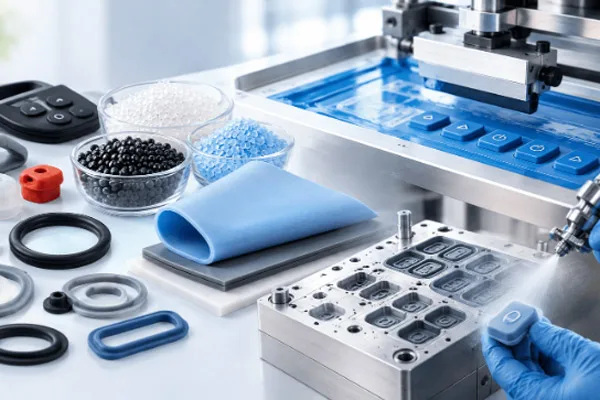
In the rapidly evolving electronics industry, the demand for reliable and long-lasting components continues to grow. One critical aspect of electronic device design is ensuring the integrity of the sealant and gasket systems, which play a vital role in preventing water, dust, and other contaminants from entering sensitive electronic components. Silicone compression molding has emerged as a popular solution for producing high-performance sealants and gaskets that meet the stringent requirements of the electronics industry.
What is Silicone Compression Molding?
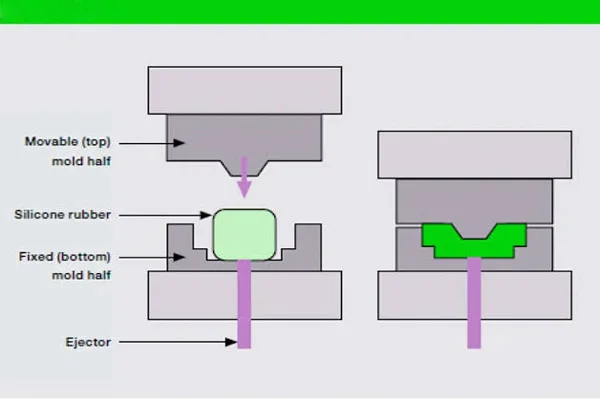
Silicone compression molding is a variant of compression molding specifically used for producing silicone-based products. This process involves compressing and shaping a silicone material between two metal molds under high pressure and heat, resulting in a durable and flexible product with high chemical resistance and temperature stability.
 How Does Silicone Compression Molding Work?
Silicone compression molding shapes uncured silicone into a finished component using heat and pressure. Here are the steps involved:
1. Prepare the material: A measured piece of uncured silicone, called a preform, is cut to the required size.
2. Load the mold: The preform is placed into a heated mold cavity designed to match the part’s shape.
3. Close and compress: The mold closes, applying pressure so the silicone spreads throughout the cavity.
4. Cure the silicone: Heat triggers the curing process, turning the silicone into a flexible, solid part. Curing time depends on the material and component.
5. Remove and finish the part: After curing, the mold opens and the component is removed. Any excess material, or flash, may be trimmed.
6. Inspect and test: The finished part is checked for dimensions, appearance, and application-specific performance.
The mold design, material formulation, temperature, pressure, and curing time all affect the quality and consistency of the final component. For electronic seals and gaskets, the molded part should also be evaluated as part of the assembled enclosure.
Advantages and Disadvantages of Silicone Compression Molding
Silicone compression molding is widely used to produce seals, gaskets, and other flexible components for electronics. Its suitability depends on the part design, production volume, and performance requirements.
Advantages
- Versatile part design: Produces silicone components in a range of shapes, sizes, and hardness levels.
- Useful temperature performance: Many silicone formulations remain flexible across a broad temperature range. Exact limits depend on the specific material.
- Moisture and environmental sealing: Properly designed and installed parts can help protect electronic enclosures from water and dust.
- Durability and flexibility: Silicone can accommodate movement and vibration while maintaining its shape and function.
- Suitable for varied production needs: Compression molding can be practical for many custom parts and production volumes.
- Material options: Different silicone formulations can be selected to meet specific requirements, such as electrical insulation or chemical exposure.
Disadvantages
- Performance depends on the full design: A suitable material alone does not guarantee a good seal. Gasket geometry, compression, housing surfaces, and assembly tolerances all matter.
- Finishing may be required: Parts can have flash or excess material that needs trimming and inspection.
- Process variation can affect consistency: Material placement, mold condition, and curing parameters can influence dimensions and part quality.
- Not suitable for every chemical or environment: Silicone properties vary by formulation, so compatibility must be confirmed for the actual application.
- Tooling and development take planning: Mold design, testing, and process optimization may be needed before production.
- Recycling can be challenging: Silicone components may have limited end-of-life options compared with some other materials.
Applications of Silicone Compression Molding in Electronics
Silicone compression molding is used in a wide range of electronic devices, including:
Consumer Electronics: Silicone compression molded parts are used in consumer electronics such as smartphones, laptops, and tablets to ensure the integrity of the seal and protect against dust and moisture.
Automotive Electronics: Silicone compression molded parts are used in automotive electronics such as infotainment systems, navigation systems, and engine control units to ensure the reliability and performance of critical systems.
Medical Electronics: Silicone compression molded parts are used in medical electronics such as insulin pumps, ventilators, and defibrillators to ensure the safety and efficacy of life-critical systems.
Industrial Electronics: Silicone compression molded parts are used in industrial electronics such as control panels, switchgear, and power distribution equipment to ensure the reliability and performance of critical systems.
 Design Considerations for Silicone Compression Molding
When designing silicone compression molded parts for electronic devices, several factors must be considered, including:
Material Selection: The choice of silicone material must be carefully considered based on the specific requirements of the application, including temperature range, chemical resistance, and flexibility.
Design Geometry: The design geometry of the silicone compression molded part must be carefully optimized to ensure that the part can be molded efficiently and effectively.
Surface Finish: The surface finish of the silicone compression molded part must be carefully controlled to ensure that it meets the requirements of the application, including smoothness, texture, and color.
Quality Control: The quality control process for silicone compression molded parts must be carefully designed to ensure that the parts meet the required specifications and standards.
Conclusion
Silicone compression molding is a critical manufacturing process in the electronics industry, providing high-performance sealants and gaskets that ensure the reliability and integrity of electronic devices. By understanding the benefits and applications of silicone compression molding, engineers and manufacturers can design and produce electronic components that meet the stringent requirements of the industry.
For more information about silicone compression molding or to discuss your project requirements, contact us here.