
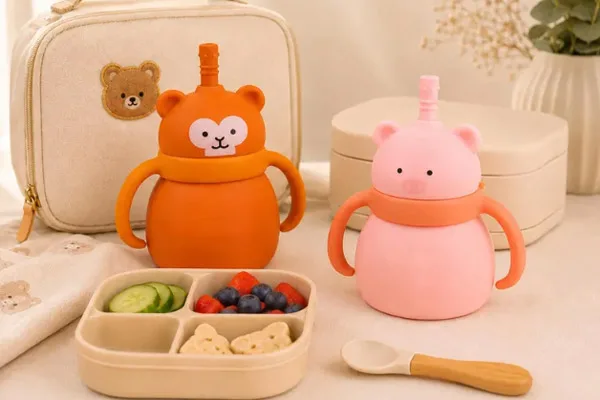
Liquid silicone rubber (LSR) molding is a manufacturing process used to produce soft, flexible, and durable components for baby products, including silicone water bottles. Depending on the bottle’s design, LSR may be used for the bottle body, spout, straw, lid seal, handles, or other flexible parts.
LSR molding is valued for its ability to create detailed parts in consistent shapes. However, a bottle’s safety and performance depend on more than the silicone alone: design, material selection, manufacturing quality, testing, and proper care all matter.
What Is LSR Molding?
LSR molding is a type of injection molding. Liquid silicone is prepared, injected into a closed mold, and heated until it cures into a solid, elastic part. The cured component is then removed, inspected, and assembled with other bottle parts if needed.
A typical process includes:
1. Designing the component: The manufacturer defines the shape, dimensions, and function of each part.
2. Preparing the material: The liquid silicone components are accurately metered and mixed. Color may be added where appropriate.
3. Injecting into the mold: The mixture is delivered into a mold designed for the part.
4. Curing: Heat causes the silicone to set into its final form.
5. Inspecting and finishing: Parts are checked for defects, dimensions, and surface quality.
6. Assembling and testing: Components are fitted together and the complete bottle is evaluated.
LSR molding is suitable for both small, detailed components and high-volume production. The mold and process must be designed for the specific part and its intended use.
Bottle Components That May Be Made with LSR
The exact construction of a baby silicone water bottle varies by product. Some bottles are mostly silicone; others combine silicone parts with rigid plastic or other materials.
Flexible bottle body
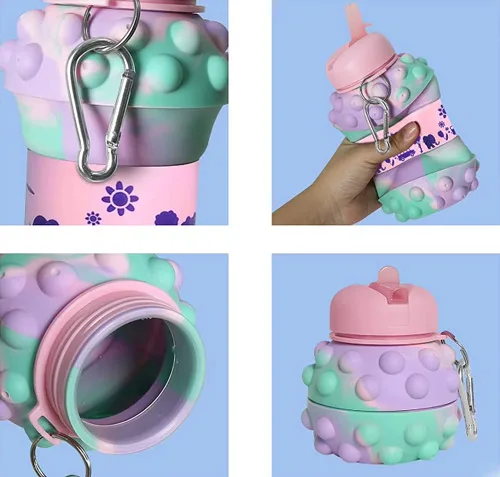
The bottle body may be molded from silicone to make it soft and squeezable. A flexible body can be easier for a child to grip and may be less likely to crack when dropped than a rigid vessel. Molded textures, raised patterns, or shaped grip zones can help make the bottle easier to hold.
The body’s wall thickness and shape affect how it feels, stands, and handles liquid. These features need to be designed carefully to balance flexibility with stability.
 Spout or drinking top
A soft silicone spout can provide a flexible drinking surface. LSR molding can form smooth contours and rounded edges, as well as more detailed shapes that may be difficult to manufacture consistently using other processes.
The design may be an open spout, a shaped drinking lip, or a flexible tip attached to a separate lid. The appropriate style depends on the intended age range and the product’s instructions.
Straw and straw tip
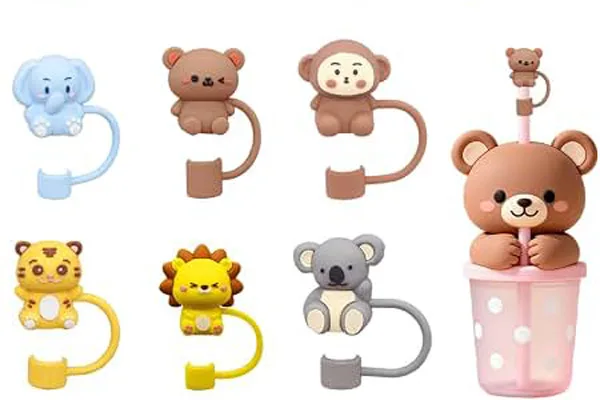
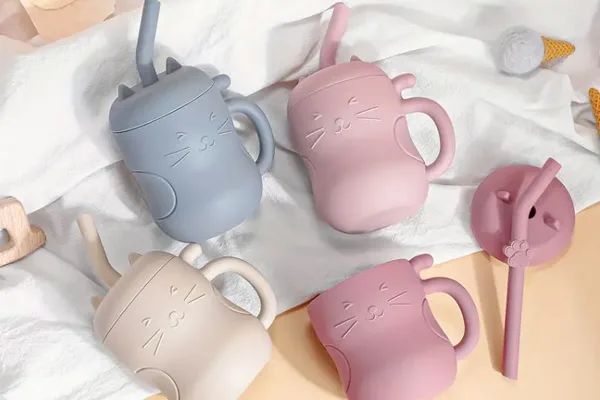
Some baby bottles use a straw system. LSR may be used to mold a flexible straw, a straw tip, or a connector between the straw and lid. In certain designs, the straw has a weighted end to help it remain near the liquid as the bottle is tilted.
The straw’s internal passage must be formed consistently so liquid can flow as intended. It should also be designed for practical cleaning, since narrow or complex passages can be harder to wash thoroughly.
 Lid seals and gaskets
A silicone gasket or sealing ring may sit between the lid and bottle. When the lid is closed, the seal compresses against adjoining surfaces to help reduce leakage.
LSR’s elasticity makes it useful for seals, but leak resistance depends on the entire system—including the lid’s design, the fit between parts, and correct assembly. A seal should be checked regularly for dirt, wear, or damage.
Valves and flow-control parts
Some bottle designs include a flexible valve that controls liquid flow or helps reduce spills. LSR molding can produce small, flexible valve components with carefully shaped openings.
Valve performance depends on precise dimensions and material properties. These parts may need to be removed for cleaning, so caregivers should follow the manufacturer’s assembly and care instructions.
Handles and grip features
Handles may be molded as silicone parts or added as separate components. Soft handles and textured grip areas can make a bottle easier for small hands to hold. LSR molding also allows patterns, ridges, or raised details to be incorporated into a part.
 Why Manufacturers Use LSR for Baby Bottles
Flexibility and elasticity
Silicone can bend and return to its original shape. This makes it useful for bottle bodies, spouts, seals, and valves that need to flex during everyday use.
Heat resistance
Silicone generally tolerates a wide temperature range, which may make it suitable for washing or sterilization when the product is designed for those methods. However, a bottle may contain several materials, and its lid, straw, decorations, or other parts may have different temperature limits. Always follow the care instructions for the complete product.
Durability
LSR components can withstand repeated handling and flexing when properly designed and manufactured. Silicone is not indestructible, though: parts can tear, become damaged, or wear out. Regular inspection is important.
Design flexibility
LSR molding can create smooth surfaces, rounded edges, textures, and detailed shapes. It can also produce flexible features—such as a seal or valve—that are difficult to achieve with rigid materials.
Consistent production
Automated molding can help manufacturers produce parts with consistent dimensions and appearance. Consistency is especially important for seals, lids, and valves, where a poor fit may affect the bottle’s function.
Design Considerations
Designing a baby silicone water bottle involves more than choosing a material. Manufacturers must consider how the bottle will be held, filled, opened, cleaned, and used.
Key design factors include:
- Grip and stability: The bottle should be comfortable to hold and stable enough for its intended use.
- Opening and assembly: Lids, straws, and valves should fit securely but remain practical for caregivers to remove and clean.
- Leak resistance: Seals and closures should be tested as part of the complete bottle.
- Cleaning access: Small passages and removable parts should be easy to clean according to the instructions.
- Age-appropriate features: The design should match the intended age range and use.
- Material compatibility: Silicone parts must fit and function properly with any plastic or metal components.
 Quality and Safety Considerations
A product being made from silicone does not automatically mean it is suitable for every baby-related use. The finished bottle should meet applicable requirements for its intended market and use.
Manufacturers may assess factors such as:
- Material suitability for food contact
- Fit and function of the lid, seal, straw, and valve
- Resistance to normal use and repeated washing
- Surface quality and absence of manufacturing defects
- Clear assembly, cleaning, and care instructions
Caregivers should check the product information and inspect the bottle regularly. Replace parts if they show signs of tearing, cracking, unusual stickiness, or other damage. Use the bottle according to the manufacturer’s instructions and supervise young children while drinking.
Conclusion
LSR molding can be used to make many parts of a baby silicone water bottle, including its flexible body, spout, straw components, seals, valves, handles, and grip features. The process supports detailed shapes and consistent production, while silicone offers flexibility and durability for everyday use.
The best results come from thoughtful product design, suitable materials, careful manufacturing, and clear cleaning guidance. When choosing a bottle, check that it is appropriate for the child’s age, complies with relevant requirements, and can be cleaned and maintained as directed.